7. Ride the ropeway to Owakudani
Owakudani, the ‘Great Boiling Valley,’ feels otherworldly, with a lunar-like landscape and plumes of sulphur steam rising from a shattered volcanic crater. Many visitors try the famous kurotamago, black eggs boiled in the hot spring pools. Legend has it that eating one adds seven years to your life.
8. Soak up an onsen-town atmosphere in Atami
An overnight stay in the seaside town of Atami on our Japan Revealed guided tour puts you in classic hot-spring country. Onsens have been a core part of Japanese culture for centuries, offering a way to relax and socialise quietly while prioritising personal health. Onsen etiquette is essential: visitors must shower before entering, keep their hair up, and refrain from wearing swimwear. Naked bathing is separated by gender but some onsen, especially the unisex ones, allow you to cover up. Talk to your local guide, who can help you make the best choices. Some venues have restrictions on visible tattoos (your Holiday Director can advise on friendly options).
9. Ride the Shinkansen
Japan’s famous high-speed bullet train, the Shinkansen, is sleek and super-punctual. Travelling on this train turns a long-distance journey into an adventure. As you settle into your comfortable seat, watch the landscape flicker between scenic rice fields, bamboo groves, towns, and mountains.
10. Marvel at Kinkaku-ji
Kinkaku-ji (Golden Pavilion) is a Zen temple covered in gold leaf, floating over a reflective pond like a dream. Pine islands and raked gravel frame the scene, each element placed for balance. As you follow the garden paths, you’ll find different viewpoints, small islands with stone lanterns, and a phoenix statue on the roof. Walk slowly to fully enjoy your visit here. This is a place where small details sing, from the ripple of koi beneath the surface to the scent of pine in the air.
11. Visit Heian Shrine and its towering torii
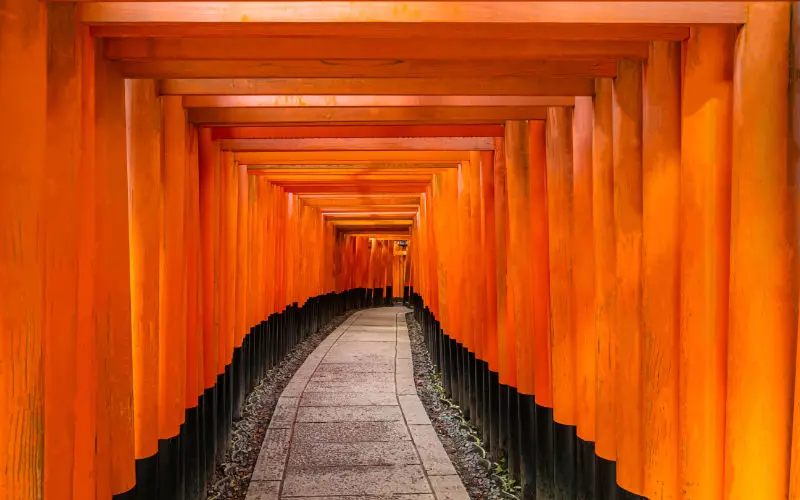
Despite its size and grandeur, Heian Shrine feels calm. Its white and vermilion buildings are inspired by Heian-period palace architecture, with wide roofs and neat, balanced lines. One of Kyoto’s largest torii gates stands at the entrance like a gateway to another era.
Read more with our full guide to things to do in Kyoto.