THINGS TO DO IN KYOTO, JAPAN
Here are just some of Kyoto’s many captivating highlights – perfect as a guide for any holiday to Japan. Our tour offers exciting excursions to the city’s major sights, but there are lots of things to do and explore in your free time.
Fushimi Inari Taisha
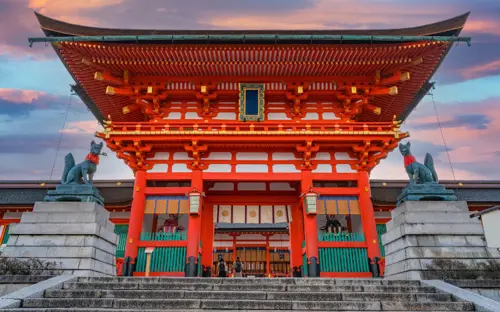
Kyoto’s most recognisable sight is a profound Shinto shrine, dedicated to Inari, the deity of rice, agriculture, and prosperity.
Its countless torii – the traditional Japanese gates commonly found at Shinto shrines – mark the transition from the everyday to the sacred. They form a spiritual tunnel up Mount Inari, with fox statues (the messengers of Inari) peeking in from mossy corners. Walking along this pilgrimage path can be both invigorating and meditative. Travellers often pause at the smaller shrines along the route, soaking up the mountain’s stillness and the gentle sounds of prayer bells.
Fushimi Sake District
South of central Kyoto is Fushimi, a district famous for its soft, spring water and centuries-old breweries making sake – the traditional Japanese alcoholic drink made from fermented rice. To learn more about sake, visit the Gekkeikan Okura Sake Museum to better understand brewing traditions, or sample small-batch ginjo and daiginjo at a local tasting room.
This district is a sensory experience as you walk the canal-side streets lined with white-walled kura storehouses. It’s ideal for travellers keen to enjoy Kyoto’s heritage and flavour.
Kinkaku-ji (Golden Pavilion)
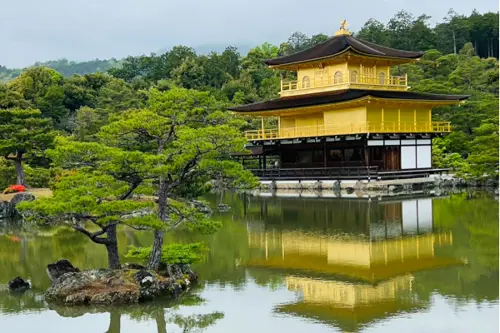
A Zen temple sheathed in gold leaf, Kinkaku-ji floats over its mirror pond like a vision. Once a shōgun’s villa, this shimmering UNESCO-listed pavilion embodies Japan’s spiritual elegance.
The looping path through its zen garden leads you through sculpted pines, intimate viewpoints, and stone lanterns. Take time to notice the details as you wander. You might pause on a quiet bench to enjoy the tranquil scene and reflect on the symbolism of gold in Japanese culture. It represents spiritual purity, enlightenment, and transformation.
Kiyomizu-Dera
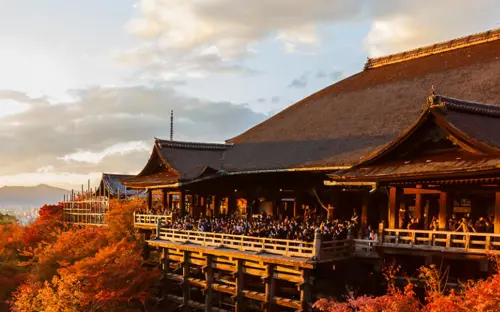
This cliff-side Buddhist temple, which stands on towering wooden stilts, offers visitors panoramic views of Kyoto and the surrounding hills that change with the seasons.
Directly translated as ‘pure water’, Kiyomizu-dera’s name references the sacred Otowa waterfall below. Legend says a sip of water from one of its three channels promises health, longevity, or love.
While here, visit the Jishu Shrine, which is dedicated to the deity of love and matchmaking. The shrine is adorned with charms and ema (prayer plaques), where visitors write their wishes for romance and stronger relationships.
Visit Nishiki Market
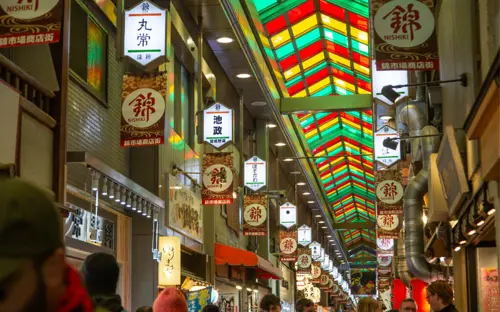
If you have free time on your Just You tour, you might consider visiting Nishiki Market. Dubbed ‘Kyoto’s Kitchen’, Nishik is a century-old arcade of artisans selling seasonal bite-sized delights – tsukemono (pickles), creamy yuba (tofu skin), tofu doughnuts, grilled eel skewers, and jewel-like wagashi sweets.
How to experience it solo? Graze as you go; many stalls offer tasters. Look for signs in English, pay in small change, and try a sit-down spot at the market’s end for kyo-ryori, Kyoto’s refined, seasonal cuisine. Pack reusable chopsticks or ask for a fork if you prefer.
Visit Gion and Learn the Art of Geiko/Maiko
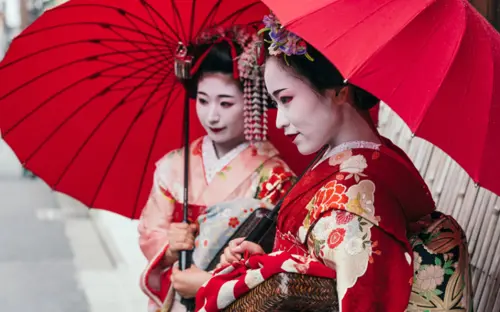
Gion’s lantern-lit lanes and wooden machiya houses are the heart of Kyoto’s geisha culture.
Spotting a geiko (a professional artisan) or maiko (an apprentice geiko) in full regalia is a highlight of exploring this area, but respect is essential – these are working artists en route to engagements. Visitors are encouraged to observe from a distance and avoid flash photography.
For a deeper experience of Gion, you might attend a theatre or dance performance or take a relaxing stroll during blue hour, when the ochaya (tea houses) glow and the district’s timeless atmosphere comes alive.
Uji Tea and Ceremony
Just south of Kyoto, Uji is home to Japan’s finest matcha. Travellers can visit one of the city’s teahouses for a traditional tea ceremony, where each gesture is steeped in meaning.
In Uji, you’ll find opportunities at every turn to discover more about Japanese tea culture. Learn the difference between usucha (light tea) and koicha (thick tea). While here, you can savour the taste of freshly whisked matcha, which is far richer than anything you’ll find at home. You can buy tins of premium tea as a delicious reminder of Kyoto.
Heian Shrine
Experience the grandeur of Heian Shrine, built to commemorate Kyoto’s ancient imperial legacy.
The shrine’s grounds evoke the elegance of Heian-era court life, while the vast gardens behind it are beautifully tranquil and offer a peaceful escape from the city. Wander along winding paths past weeping willows, irises, and ponds featuring elegant stone bridges.
Hidden Gardens
Kyoto’s beauty often hides in plain sight. You could seek out small temple gardens such as Shisen-do or Murin-an in your free time, where trickling streams, mossy stones and sculpted pines create intimate sanctuaries.
Many of these small temple gardens offer travellers a space for reflection, as they are often uncrowded. Take a moment to sit, listen to the birdsong, and admire the artistry that defines Kyoto’s garden culture.
Tempted to join a Just You tour? Discover our top ten tips for travelling solo.